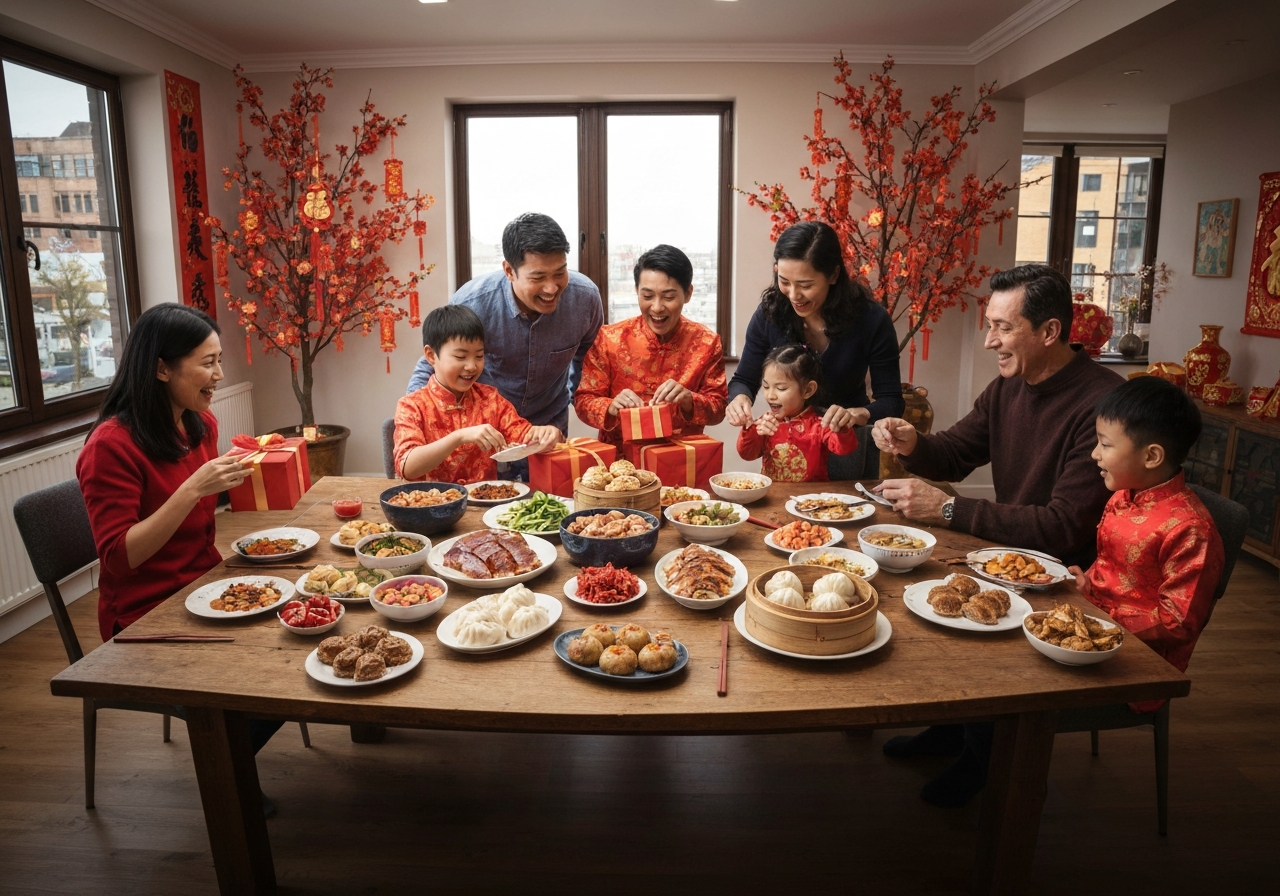
Gung Hei Fat Choi! How the UK Celebrates Chinese New Year
The Year of the Horse gallops into Britain with colour, cuisine, and centuries-old tradition
A Festival That Lights Up Britain
Chinese New Year 2026 falls on February 17th, ushering in the Year of the Horse — and across the United Kingdom, communities are throwing open their doors to share one of the world’s most vibrant and spectacular festivals. From the dazzling lantern displays of London’s Chinatown to intimate family gatherings in cities across the country, Chinese New Year has firmly established itself as a highlight of the British cultural calendar.
The celebrations don’t end on New Year’s Day — the festival traditionally spans 15 days, culminating in the Lantern Festival, meaning the festivities are still very much in full swing right now.
Where to Celebrate: UK Events and Hotspots
London
The capital boasts the largest Chinese New Year celebrations outside of Asia. London Chinatown, centred around Gerrard Street in the West End, transforms into a sea of red and gold, with hundreds of thousands of visitors descending each year. Expect:
- Dragon and lion dances weaving through narrow streets
- Firecracker ceremonies to ward off evil spirits
- Live cultural performances and martial arts displays
- A spectacular parade through Trafalgar Square and into Chinatown
Iconic restaurants in the area, including Four Seasons (renowned for its Cantonese roast duck), HKK, and Barshu on Frith Street, offer special New Year menus — though booking weeks in advance is strongly advised. The beloved Leong’s Legends on Macclesfield Street is a perennial favourite for its authentic Taiwanese dim sum during the season.
Manchester
Manchester’s Chinatown — the second largest in the UK — puts on a spectacular show. Faulkner Street becomes the epicentre of celebrations, with the famous Manchester Chinese New Year Festival drawing enormous crowds. Local restaurants like Yuzu and Tattu create bespoke tasting menus inspired by traditional New Year dishes, while dim sum houses along Princess Street are packed from morning until night.
Birmingham
Birmingham’s Chinese community celebrates with events centred around Arcadian Centre in the city’s Chinese Quarter. Restaurants including Chung Ying Garden — a Birmingham institution since 1981 — offer traditional banquet menus ideal for family gatherings.
Edinburgh and Glasgow
Scotland’s Chinese communities hold vibrant celebrations in both cities. Glasgow’s Sauchiehall Street area sees lion dance performances, while Edinburgh hosts community events at the Scottish Chinese Arts Association, featuring cultural workshops, calligraphy demonstrations, and traditional music.
The Food: A Feast of Meaning and Flavour
Chinese New Year food is never arbitrary — every dish carries symbolic significance, connecting diners to hopes for health, wealth, happiness, and longevity in the year ahead.
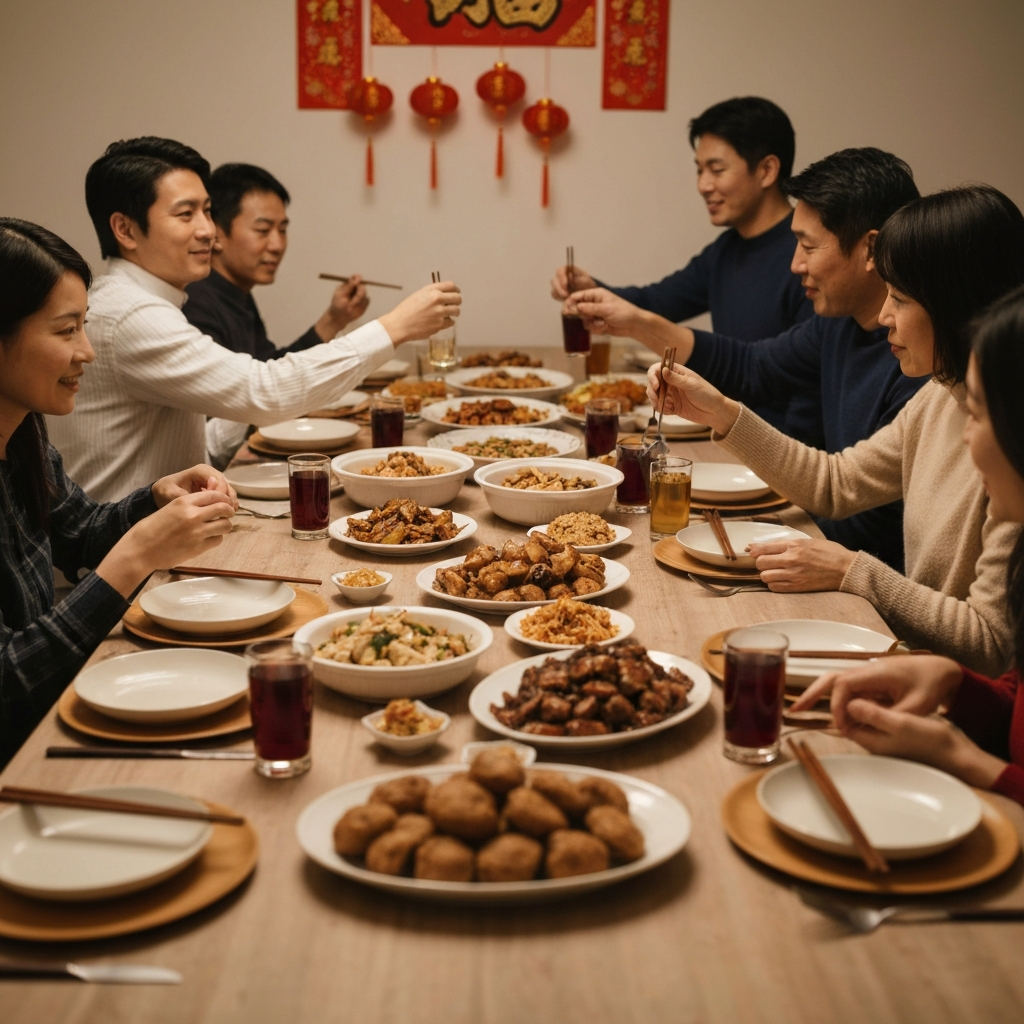
Must-Eat New Year Dishes
Whole Fish (鱼 – Yú) Fish is essential at any New Year banquet. The Mandarin word yú sounds like “surplus,” symbolising abundance. It’s traditionally served whole — head and tail intact — representing a complete and prosperous year. Steamed sea bass with ginger and spring onion is a classic preparation found across UK Chinese restaurants during the season.
Long Noodles (长寿面 – Chángshòu Miàn) “Longevity noodles” must never be cut — the longer, the better. Slurping these unbroken strands is believed to extend your lifespan. London’s Bao restaurant and various dim sum specialists serve these in celebratory broths throughout the festival period.
Dumplings (饺子 – Jiǎozi) Perhaps the most recognisable New Year food, dumplings shaped like ancient gold ingots are believed to bring financial fortune. Families often gather to make them together — a tradition increasingly popular among British-Chinese households and celebrated in community cooking events across the UK. Dumpling Shack in London’s Spitalfields Market and Dumplings’ Legend in Chinatown are worth visiting for exceptional hand-made versions.
Glutinous Rice Cake (年糕 – Nián Gāo) Nián gāo literally means “year high” — symbolising progress and rising fortunes year upon year. This sticky, sweet cake made from glutinous rice flour is fried, steamed, or eaten in soups. Look for it in Chinese supermarkets like See Woo or Wing Yip across the UK, or order it in traditional dessert form at Chinatown eateries.
Spring Rolls (春卷 – Chūn Juǎn) These golden, crispy parcels represent wealth — their cylindrical shape and golden colour resembling gold bars. A staple of dim sum menus across the country, they feature heavily in New Year celebrations both at home and in restaurants.
Tang Yuan (汤圆) These glutinous rice balls filled with sesame paste or red bean are eaten at the Lantern Festival on the 15th day. Their round shape symbolises family reunion and wholeness. Several London and Manchester restaurants host special Lantern Festival dinners.
Whole Chicken Served with head and feet attached, a whole chicken represents family unity and prosperity. Often prepared as white-cut chicken (白切鸡) — poached and served simply with ginger-spring onion sauce — it’s a centrepiece of family New Year meals.
Lotus Root, Oysters, and Lettuce Each carries auspicious meaning: lotus root (lián ǒu) symbolises continuous fortune, dried oysters (háo sǐ) sound like “good things,” and lettuce (shēng cài) resembles the phrase for “growing money.”
Traditions and Customs
Red Envelopes (红包 – Hóngbāo)
The gifting of red envelopes containing money is one of the festival’s most beloved traditions. Married couples give hóngbāo to children and unmarried relatives, with the red colour believed to ward off evil spirits and bring luck. In the digital age, many British-Chinese families also send virtual red envelopes via apps like WeChat.
Spring Cleaning
In the days before New Year, homes are thoroughly cleaned to sweep away bad luck and make room for incoming good fortune. Crucially, no cleaning should be done on New Year’s Day itself — you might accidentally sweep away the new year’s luck.
Decorations
Homes and businesses are adorned with:
- Red lanterns symbolising good luck
- Paper cuttings with auspicious characters (福 – fú, meaning fortune)
- Kumquat and pussy willow trees displayed in homes
- Plum blossom branches representing resilience
Lion and Dragon Dances
These spectacular performances are as much about spiritual protection as entertainment. The lion dance is believed to scare away evil spirits, while the dragon dance brings good luck and prosperity to businesses and communities. Restaurants, shops, and community centres across the UK invite lion dance troupes to perform, with the clicking of cymbals and boom of drums filling the air.
Many UK cities coordinate lion dance routes through their local business districts — look out for announcements from your local Chinese community association.
Firecrackers and Fireworks
The noise is deliberate — loud bangs ward off the mythical beast Nián, who supposedly feared loud sounds and the colour red. While personal fireworks are restricted in the UK, organised displays in Chinatowns and public spaces continue the tradition safely and spectacularly.
Family Reunion Dinner (年夜饭 – Nián Yè Fàn)
The most important meal of the year takes place on New Year’s Eve, when families gather for a feast. For British-Chinese families, this might mean cooking traditional recipes passed down through generations, booking a table at a favourite Chinese restaurant, or a combination of both. Many UK Chinese restaurants offer special reunion banquet menus — often fully booked months in advance.
Chinese New Year and British Culture
Chinese New Year has woven itself into the fabric of British multicultural life in a way few other festivals have. Schools mark the occasion with art projects and cultural lessons; supermarkets stock special ingredients; and millions of Britons of all backgrounds head to their nearest Chinatown to witness the celebrations.
The festival serves as a powerful reminder of the long history of Chinese communities in Britain — from the original Chinatowns established by sailors in Liverpool and London in the 19th century, to the vibrant, diverse British-Chinese community of today, estimated at over 400,000 people.
Whether you’re joining the crowds in Trafalgar Square, sitting down to a celebratory meal at a local restaurant, or making dumplings at home for the first time, Chinese New Year offers something universal: a joyful, delicious, and deeply meaningful celebration of new beginnings.
Wishing everyone a prosperous and galloping Year of the Horse — 马到成功 (Mǎ Dào Chénggōng) — may success come as swiftly as a horse!
Practical Tips for Celebrating in the UK:
- Book restaurants well in advance — New Year period tables disappear fast
- Visit Chinatown early in the day to avoid the largest crowds
- Wear red for good luck
- Check your local council or Chinese community association websites for event listings
- Many supermarkets including Sainsbury’s, Waitrose, and Wing Yip stock New Year ingredients and gift sets
Post Comment